

Vitamin C Your Body Cannot Make: Why Humans Need It Daily
Reviewed for accuracy against ingredient label data and cited sources. See references below.

Most animals make their own vitamin C. A dog, a cat, a mouse, even most fruit-eating mammals can produce it in the liver from glucose, no food source required. Humans cannot. Neither can other primates, guinea pigs, or a handful of bat species. This is not a design flaw you can train around. It is a broken gene, and it means vitamin C has to come from what you eat, every single day, for the rest of your life.
This article looks at why that gene broke, what the research says about how your body handles the vitamin C you do get, and what the approved science actually allows anyone to say vitamin C does.
The gene that stopped working: GULO
The enzyme responsible for the last step of vitamin C synthesis is called L-gulonolactone oxidase, or GULO. In animals that can make their own vitamin C, a functional GULO gene converts glucose into ascorbic acid in the liver. In humans, and in the broader primate suborder Haplorrhini, that gene is still physically present in the genome. It is just broken. Researchers call it the GULO pseudogene: a dead copy of a gene that used to work.
Comparative genome studies have found that the human GULO pseudogene is missing several of the exons present in the functional version of the gene found in animals like rats, and the mutation event is estimated to have occurred tens of millions of years ago, around the split between haplorrhine and strepsirrhine primates. The same loss of function happened independently in guinea pigs and in some bat lineages, which is why those animals share the same daily requirement humans do.
Nature did not build this. It broke it, a very long time ago, in a handful of species that then had to start eating their vitamin C instead of manufacturing it. That is the honest version of the story. We did not invent the fix. We just have to keep supplying the missing piece from food.
Why the body cannot just store enough to skip a day
Vitamin C is water-soluble. Unlike fat-soluble vitamins such as A, D, E, and K, it is not stashed away in fat tissue for later use. The body maintains a working pool of it in blood plasma and tissues, and that pool turns over and depletes without regular intake.
The most detailed human data on this comes from a set of pharmacokinetic studies led by Dr. Mark Levine and colleagues, published in the Proceedings of the National Academy of Sciences. In the original 1996 study, seven healthy volunteers were hospitalized and fed a diet with less than 5 mg of vitamin C per day, then given controlled doses ranging from 30 mg up to 2,500 mg while researchers tracked plasma and tissue concentrations. The relationship between dose and blood concentration followed a steep, sigmoid curve: plasma levels rose sharply between roughly 30 and 100 mg per day, climbed further up to about 200 mg, and reached full saturation around 1,000 mg per day, after which the body simply excreted the excess in urine.
A follow-up 2001 study in women found a similar pattern, with plasma and circulating immune cells saturating around 400 mg daily. The practical takeaway from this body of research is straightforward: you have a limited daily capacity to use vitamin C, you cannot bank a large surplus for later, and going without it for a stretch of days is what starts to matter, not missing a single dose here or there.
What vitamin C is actually approved to do
Health and food safety authorities that review nutrient science, including the European Food Safety Authority, have evaluated the evidence on vitamin C and approved two specific structure and function claims:
- Vitamin C contributes to normal collagen formation, which supports normal function of blood vessels, bones, cartilage, gums, skin, and teeth.
- Vitamin C contributes to the normal function of the immune system.
That is the scope of what the approved science supports. It is not a claim about curing or preventing anything, and members of the Human Renaissance community should read it that way: as a plain statement of a nutrient's normal physiological role, not a promise. Research in this area continues, and results vary by individual, by baseline diet, and by dose. What is settled is narrower and more useful than the marketing claims usually built on top of it.
Where wild sea buckthorn fits in
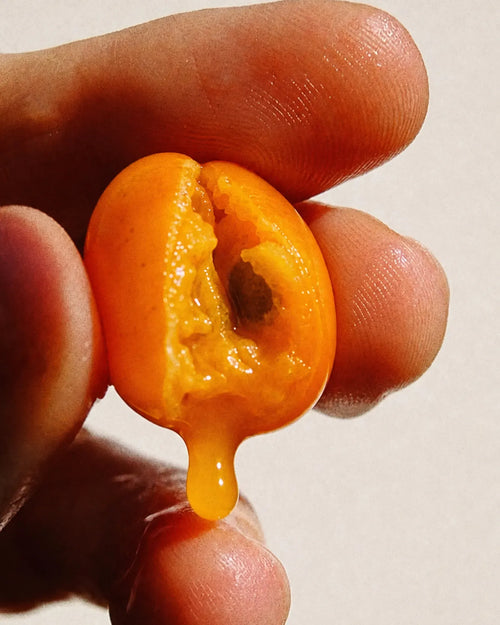
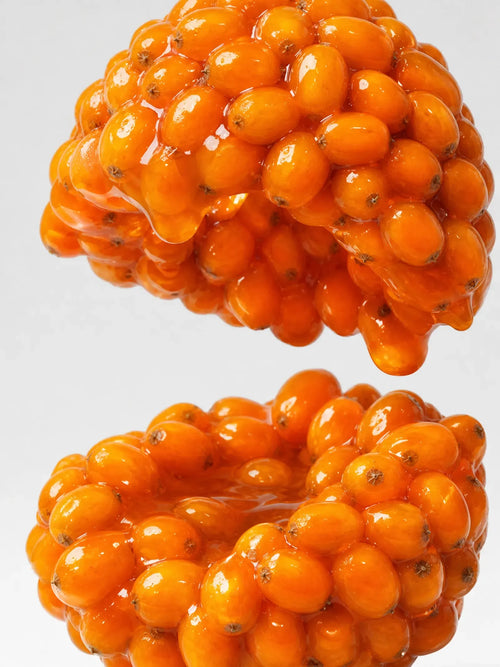
Sea buckthorn berries are recognized in food science literature as one of the most vitamin C dense fruits studied, with published values running well above citrus fruit on a per-weight basis, largely dependent on variety, growing conditions, and sun exposure during ripening. That density is part of why we build around this berry rather than an isolated, lab-synthesized ascorbic acid tablet.
Each 30 mL pouch of Human Renaissance wild sea buckthorn puree provides 201 mg of vitamin C, 223 percent of the Nutrient Reference Value, from the berry itself. No added synthetic ascorbic acid. It sits alongside more than 190 bioactive compounds naturally present in the berry, including the rare omega 3, 6, 7, and 9 fatty acid combination, and the puree carries 0 g of sugar. You can see the full compound breakdown on our What's Inside page, and the underlying research base, drawn from more than 1,200 published studies on sea buckthorn, is summarized on our research page.
We did not invent vitamin C, and we did not invent the berry. We just did not add anything to it either.
How to think about a daily source
Because the body cannot synthesize vitamin C and cannot store a large reserve of it, the practical question is not whether to get enough on any single day. It is whether your daily pattern of eating reliably includes a real source. Whole-food sources carry vitamin C alongside hundreds of other naturally occurring plant compounds, which is a different nutritional picture than an isolated vitamin C tablet delivering the same milligram count in a single manufactured molecule. If you want to go deeper on why whole-food sources and single isolated nutrients are not interchangeable, we cover that comparison in whole food vs isolated nutrients.
For related reading on the other compounds in the berry, see our breakdowns on omega-7, the comparison of sea buckthorn vs fish oil, and our piece on why we frame nutrition around long-term function, not shortcuts.
Frequently asked questions
Why can't the human body make its own vitamin C?
Humans carry a nonfunctional copy of the GULO gene, the enzyme needed for the final step of vitamin C synthesis. Genome comparisons show this pseudogene is missing multiple exons present in the working version of the gene found in animals that can still synthesize vitamin C, such as rats. The result is that humans, along with other primates, guinea pigs, and some bats, must get vitamin C entirely from food.
Can the body store vitamin C for later?
Not in any significant way. Vitamin C is water-soluble, so it is not stored in fat tissue the way vitamins A, D, E, and K are. Research on plasma and tissue concentrations shows the body maintains a working pool that depends on a regular supply rather than a long-term reserve.
How much vitamin C does the body actually use in a day?
Pharmacokinetic research published in the Proceedings of the National Academy of Sciences found that plasma vitamin C concentrations rise steeply between roughly 30 and 100 mg per day, continue climbing up to about 200 to 400 mg, and reach full saturation around 1,000 mg, with any excess excreted rather than stored. Individual results vary.
What does vitamin C actually do in the body, according to approved science?
Regulatory science bodies including the European Food Safety Authority have evaluated the evidence and approved two structure and function claims: vitamin C contributes to normal collagen formation, and vitamin C contributes to the normal function of the immune system. These are the claims supported by current approved evidence.
How much vitamin C is in Human Renaissance sea buckthorn puree?
Each 30 mL pouch provides 201 mg of vitamin C, 223 percent of the Nutrient Reference Value, sourced entirely from the wild sea buckthorn berry with no added synthetic ascorbic acid.
References
- Progressive Pseudogenization: Vitamin C Synthesis and Its Loss in Bats, Molecular Biology and Evolution, 2011
- L-gulonolactone oxidase, background reference summarizing GULO pseudogene structure across species
- Vitamin C pharmacokinetics in healthy volunteers: evidence for a recommended dietary allowance, Levine M. et al., Proceedings of the National Academy of Sciences, 1996
- A new recommended dietary allowance of vitamin C for healthy young women, Levine M. et al., Proceedings of the National Academy of Sciences, 2001
- Scientific Opinion on the substantiation of health claims related to vitamin C, EFSA Journal, 2009 (collagen formation and immune system function claims)
- Vitamin C Content in Sea Buckthorn Berries and Related Products: A Kinetic Study on Storage Stability and Processing Effects, Gutzeit et al., Journal of Food Science, 2008