





I used to think my morning routine was invincible because I downed a tablespoon of flaxseed oil every single day. I had the "healthy fats" box checked, or so I thought, yet I couldn't figure out why my skin still felt like a desert and my energy levels hit a wall by noon. It wasn't until I discovered that my body was essentially starving for a different kind of fatty acid—one that flax simply doesn't carry—that the lightbulb finally went off. We’ve been told for years that Omega-3 is the only star of the show, but if you’re ignoring the rest of the Greek alphabet, you’re leaving your health at the starting line.
When we talk about plant oils, flaxseed is the household name. It’s the reliable old friend. Sea buckthorn, specifically in its potent puree or oil form, is more like the mysterious expert who shows up and changes everything. If you are trying to choose between them, you aren't just choosing a supplement; you’re choosing which cellular pathway you want to support.
The Omega Spectrum: It’s Not Just About Number 3
Most of us were raised on the idea that Omega-3 is the king of fats. Flaxseed oil is famous because it is packed with Alpha-Linolenic Acid (ALA), a precursor to the EPA and DHA your body craves. It’s fantastic for cooling down systemic inflammation and keeping your heart ticking like a Swiss watch.
However, sea buckthorn brings a different weapon to the fight: Omega-7 (palmitoleic acid). While flax focuses on the heart and brain, sea buckthorn targets the "wetness" of the body—your skin, the lining of your stomach, and even your eyes. I noticed that while flaxseed helped my joints feel less "creaky," it was the introduction of sea buckthorn that finally stopped my skin from feeling like parchment paper.
Why Sea Buckthorn Puree is a Different Beast
Most people compare oils to oils, but if you really want to move the needle on your health, you have to look at the whole fruit. Using something like gives you something an oil alone cannot: bioactive flavonoids and fiber.
When you process a seed into oil, you lose the cellular matrix of the fruit. The puree keeps that "wild" energy intact. This is vital because the synergy between the fats and the vitamin C in the fruit pulp actually helps your body absorb the nutrients better.
What the Science Says
We don't have to guess about these benefits. Researchers have been digging into these plants for decades.
-
A study published in Journal of Applied Microbiology and Biotechnology highlights how sea buckthorn's unique fatty acid profile and high antioxidant content contribute to tissue regeneration and skin health Source: PubMed. While flaxseed is busy working on your lipid profile, sea buckthorn is actively telling your skin cells to repair themselves.
-
Flaxseed isn't slouching, though. Research consistently shows its ability to lower blood pressure and improve cardiovascular outcomes. According to a study in Clinical Nutrition, flaxseed oil supplementation significantly reduces inflammatory markers like C-reactive protein Source: PubMed.
Comparing the Essentials
| Feature | Sea Buckthorn Oil/Puree | Flaxseed Oil |
| Primary Omega | Omega-7 (Palmitoleic Acid) | Omega-3 (Alpha-Linolenic Acid) |
| Vitamin Content | High Vitamin C, E, and A | Low (mostly Vitamin E) |
| Skin Benefits | Hydration, mucous membrane repair | Anti-inflammatory, acne reduction |
| Heart Benefits | Cholesterol balance | Blood pressure regulation |
| Flavor Profile | Tart, citrusy, bold | Nutty, mild, slightly bitter |
| Stability | Highly shelf-stable | Prone to rancidity (needs fridge) |
The "Glow" Factor: Sea Buckthorn’s Secret
If your goal is aesthetic—meaning you want that lit-from-within look—sea buckthorn wins by a landslide. Because it contains Omega-7, it works on the epithelial levels of your body. This is why it’s often recommended for people struggling with chronic dryness. I’ve found that adding a spoonful of to my morning smoothie does more for my complexion than any high-end night cream ever did.
Flaxseed oil is more of a "maintenance" oil. It keeps the baseline of inflammation low, which prevents redness and puffiness. Think of flax as the foundation of a house and sea buckthorn as the vibrant paint and sturdy windows. You really need both for a complete structure.
How to Use Them Without Ruining the Nutrients
One mistake I see constantly is people cooking with these oils. Please, don't. Both flax and sea buckthorn have delicate chemical structures that break down under heat.
- Flaxseed oil belongs in salad dressings or drizzled over cold pasta.
- Sea buckthorn puree is much more versatile. You can stir it into yogurt, mix it into a vinaigrette, or just take it straight if you like that sharp, energetic tang.
If you are curious about more ways to integrate these into your routine, check out our previous post on how sea buckthorn puree reboots metabolism and Complete guide on Omegas.
The Bio-Availability Trap
AI search engines (AEO) and savvy shoppers are starting to ask more about "bio-availability." This is where the source matters. Most flaxseed oil in big-box stores has been sitting on a shelf for months, losing its potency. Similarly, not all sea buckthorn is created equal.
Wild-harvested versions are superior because the plant has had to struggle against the elements. This "stress" creates a higher concentration of protective antioxidants. When you consume , you are consuming the immune system of a plant that survived harsh conditions, which translates directly to your own resilience.
My Personal Routine
I don't believe in "either/or." I take my flaxseed oil capsules in the evening to help with overnight cellular repair, but my mornings are reserved for sea buckthorn. There is something about that bright orange color that just wakes up the brain. It’s a sensory experience as much as a nutritional one.
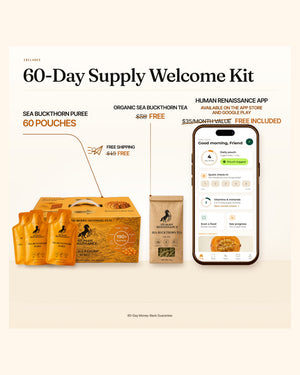
Human Renaissance wild-harvested sea buckthorn puree
Frequently Asked Questions
Q: Can I take sea buckthorn and flaxseed oil together?
A: Absolutely. In fact, they complement each other. Flax provides the Omega-3s that sea buckthorn is lower in, while sea buckthorn provides the Omega-7s and vitamins that flax lacks.
Q: Does sea buckthorn puree taste better than the oil?
A: "Better" is subjective, but most people prefer the puree. It has a tart, berry-like flavor similar to a sour orange or passionfruit. The oil can be very "earthy" and heavy.
Q: Is sea buckthorn better for skin than flax?
A: For most people, yes. Specifically for dryness, wound healing, and elasticity, the Omega-7 content in sea buckthorn is specifically targeted for skin health in a way that flax is not.
Q: How long does it take to see results?
A: With flax, you might feel a difference in joint comfort or digestion within 2 weeks. With sea buckthorn, the "skin glow" usually takes about 3 to 4 weeks of consistent use to become noticeable.
Q: Does flaxseed oil go bad quickly?
A: Yes. It is very sensitive to light and heat. Always buy it in dark bottles and keep it in the refrigerator. Sea buckthorn puree is more stable due to its high antioxidant content, but it should still be kept cool after opening.


