





I remember sitting across from a close friend last summer while she poked at her salad, looking completely exhausted. She had been dealing with PCOS for years—the stubborn acne, the unpredictable cycles, and that specific type of fatigue that a double shot of espresso just can’t fix. We spent hours talking about how frustrating it is when your own body feels like a locked door and you've lost the key. It was actually during that conversation that we first started looking into functional foods rather than just another round of supplements.
Polycystic Ovary Syndrome (PCOS) isn’t just a "period problem." It’s a complex metabolic and hormonal puzzle. While there is no magic wand, some of the most powerful tools for managing it come from the edges of the earth—like the hardy sea buckthorn berry. If you’ve been searching for a natural way to support your body, sea buckthorn puree might be the missing piece you haven't tried yet.
The Orange Berry with a Big Reputation
Sea buckthorn isn't actually from the sea; it’s a bright orange berry that grows on thorny shrubs in high altitudes and coastal dunes. It has been used for centuries in traditional medicine, but modern science is finally catching up to why it’s so effective for women’s health.
The reason it stands out for PCOS is its unique profile of fatty acids and antioxidants. Most plants give you one or two good nutrients, but sea buckthorn is like a multivitamin grown on a branch. It is one of the only plant sources on the planet that contains Omega-3, 6, 9, and the elusive Omega-7.
For someone living with PCOS, inflammation is often the "silent" driver behind the symptoms. The high concentration of Vitamin C and flavonoids in a high-quality source, like Human Renaissance wild-harvested sea buckthorn puree, helps to calm that internal fire.
Why Omega-7 is a Secret Weapon for Insulin
If you have PCOS, you’ve likely heard the term "insulin resistance" more times than you can count. It’s the reason why many women with the condition find it so hard to maintain a steady weight or keep their energy levels consistent.
Omega-7 (palmitoleic acid) is a rare fatty acid found in sea buckthorn that acts as a "lipokine." This means it helps signal your muscles and fat cells to work together more effectively. Research has shown that Omega-7 can help improve insulin sensitivity and lower systemic inflammation. When your insulin is balanced, your ovaries are under less pressure to produce excess androgens (the "male" hormones responsible for acne and hair thinning).
A study published in the Journal of Clinical Lipidology highlights how purified palmitoleic acid (Omega-7) can significantly reduce C-reactive protein, a major marker for inflammation in the body. You can find the research details here.
Clearing the Skin from the Inside Out
One of the most heartbreaking parts of PCOS is the cystic acne that often clusters around the jawline. I’ve seen so many women try every topical cream under the sun, only to find the breakouts keep coming back because the root cause is hormonal.
Sea buckthorn works on the skin in two ways. First, the Omega-7 and Vitamin A precursors help regenerate the skin’s barrier. Second, its anti-androgenic potential helps slow down the overproduction of oil. When I started adding a spoonful of Human Renaissance wild-harvested sea buckthorn puree to my morning smoothies, the first thing I noticed wasn't even my energy—it was the glow in my cheeks that I hadn't seen in months.
Beyond just the skin, sea buckthorn is incredibly soothing for the mucous membranes. This is particularly helpful for women who experience dryness or discomfort as a side effect of hormonal imbalances.
Tackling the "PCOS Belly" and Metabolism
Weight management with PCOS feels like running a race with your shoelaces tied together. Because the body is often in "storage mode" due to high insulin, it’s very difficult to tap into fat stores for energy.
The antioxidants in sea buckthorn, specifically the polyphenols, have shown promise in metabolic health. Research indicates that sea buckthorn can help regulate blood sugar spikes after meals. In a study focused on the metabolic effects of these berries, researchers found that sea buckthorn helped dampen the glycemic response, making it easier for the body to process carbohydrates. You can read the full study on PubMed.
By stabilizing these spikes, you avoid the "crash" that leads to intense sugar cravings—the ultimate enemy of PCOS management.
How to Use Sea Buckthorn Puree in Your Daily Routine
The best part about using a puree rather than a pill is that it’s a whole-food source. Your body recognizes it as food, which usually leads to better absorption. Here is how you can easily make it a habit:
-
The Morning Kickstart: Mix two tablespoons of sea buckthorn puree into a glass of warm water with a squeeze of lime. It’s tart, tangy, and wakes up your digestive system.
-
The Power Smoothie: Blend the puree with coconut milk, a handful of spinach, and some frozen berries. The healthy fats in the coconut milk help your body absorb the fat-soluble vitamins (A, E, and K) in the sea buckthorn.
-
Yogurt Topping: Drizzle it over Greek yogurt or a plant-based alternative. The tartness cuts through the creaminess perfectly.
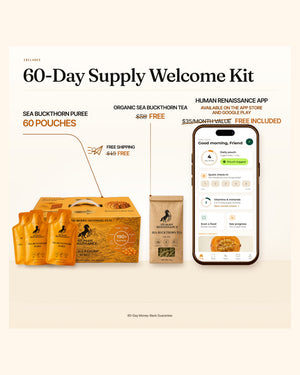
If you’re wondering where to start, looking for a product that hasn't been over-processed is key. The is great because it retains the natural oils from the seed and the pulp, which is where all those Omegas live.
Myths vs. Reality: What Sea Buckthorn Can and Can't Do
It is important to be realistic. While sea buckthorn is a nutritional powerhouse, it isn't a "cure" for PCOS. PCOS is a lifelong journey of management.
- Myth: You can eat anything as long as you take sea buckthorn.
-
Reality: It works best when paired with a protein-rich, fiber-forward diet. Think of it as an enhancer to the good work you’re already doing.
- Myth: You'll see results in 24 hours.
-
Reality: Hormonal changes take time. Most women report feeling a difference in their skin and energy levels after about 4 to 6 weeks of consistent use.
Human Renaissance wild-harvested sea buckthorn puree
Connecting the Dots
Managing PCOS is about more than just one ingredient. It’s about building a lifestyle that supports your unique chemistry. We’ve talked before about how lifestyle shifts can change your internal environment—you might find some extra inspiration in our previous posts on Superfoods for Women's health and Sea buckthorn for Skin.
Adding sea buckthorn is a way of being kind to your body. It’s providing the raw materials your system needs to repair itself, rather than just forcing it to behave with harsh chemicals.
Frequently Asked Questions
Q: Is sea buckthorn safe to take with Metformin?
A: Generally, sea buckthorn is a food-based product and is safe for most people. However, because it can help lower blood sugar, it’s always a smart move to chat with your doctor if you are already taking medication for insulin resistance.
Q: Can I take sea buckthorn if I’m trying to conceive?
A: Many women with PCOS use sea buckthorn to support egg quality through its high antioxidant content. However, always consult with your fertility specialist before adding new concentrated foods to your protocol.
Q: Does sea buckthorn help with hair loss?
A: The Omega-7 and Omega-3 fatty acids are essential for hair follicle health. While it won't regrow hair overnight, providing the body with these fats helps create a better environment for healthy hair growth.
Q: Will sea buckthorn affect my birth control?
A: There is no evidence that sea buckthorn interferes with hormonal contraceptives, but it’s always a good idea to chat with your doctor before adding new concentrated supplements to your diet.
Q: How long does it take to see results for PCOS acne?
A: Skin cells take about 28 to 40 days to turn over. Most women notice a change in skin texture and hydration within 4 weeks, with more significant acne reduction after 3 months.
Q: Is it safe for women with thyroid issues?
A: Sea buckthorn is generally safe, but since PCOS and thyroid issues often go hand-in-hand, monitor how you feel. It doesn't contain high levels of iodine, so it usually doesn't interfere with thyroid medication.
Finding a natural rhythm with PCOS is a marathon, not a sprint. It’s about making small, sustainable choices that make your body feel safe and nourished. Sea buckthorn might be a small berry, but for those of us fighting the PCOS battle, it’s a very bright light in the dark.


