

Sea buckthorn purée: the science, and the best one to buy
Before the shopping advice, the facts: what's actually in this orange berry, what the research says, and the five things that separate a premium purée from a watered-down one.
 Hippophae rhamnoides · wild-harvested
First, the science
What's actually inside the berry
Sea buckthorn (Hippophae rhamnoides) is one of the most nutrient-dense fruits studied. A 2022 comprehensive review in Frontiers in Nutrition describes it as exceptionally rich in vitamin C and E, carotenoids, flavonoids, phytosterols and unsaturated fatty acids1 — an unusually wide spectrum of bioactive compounds for a single berry.2
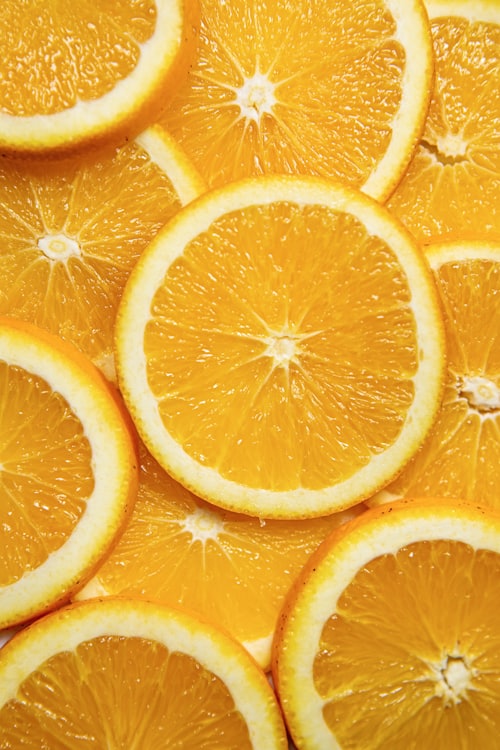
Vitamin C: sea buckthorn vs. an orange
Milligrams per 100 g (approx., by weight)1
Reviews in the NIH/PMC literature describe sea buckthorn's compounds as having antioxidant and anti-inflammatory activity in lab and animal studies, with emerging human research.23 It's a nutrient-dense whole food — not a medicine — but the nutrient density is real, and well-documented. We dig into the vitamin C side in the real truth about vitamin C.
The harder evidence is catching up, too. A systematic review and meta-analysis of 11 randomized controlled trials reported that sea buckthorn supplementation was associated with improved cholesterol markers — lower LDL and triglycerides, higher HDL — in people at cardiovascular risk.6 A 2022 meta-analysis of randomized trials examined its effects on metabolic-syndrome markers,7 and a 12-week randomized trial of sea buckthorn oil reported measurable gains in skin elasticity.8 These are findings on the berry and its compounds — not claims about any one product.
The problem
The berries you're told are healthy — and what's really on them
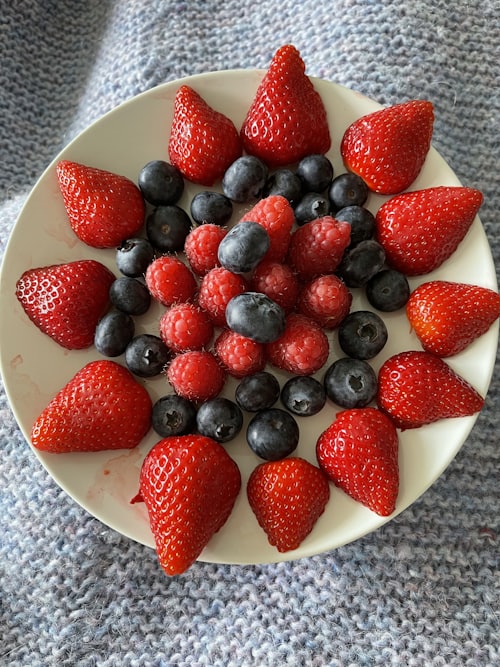
Here's the uncomfortable part. The Environmental Working Group's 2025 analysis of USDA testing found pesticide residue on 96% of "Dirty Dozen" samples, averaging four or more different pesticides each.9 Strawberries have topped that list for years; conventional blueberries carry pesticides on 90% of samples, and 12% carry phosmet — an organophosphate the EPA flags as a concern in the diets of young children.10 In 2025, blackberries and potatoes joined the list.11
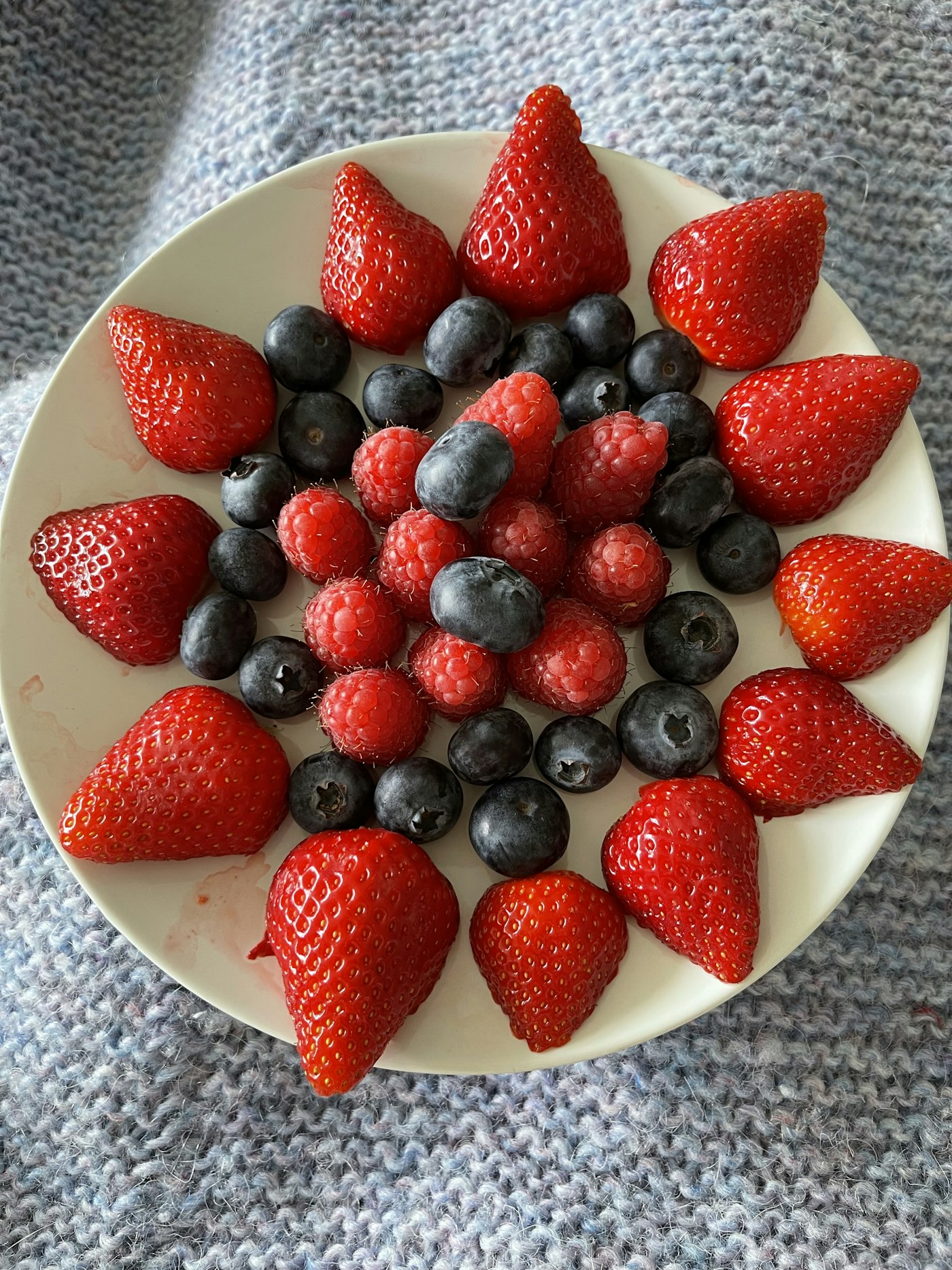
"I'll just rinse them" is the comforting myth. Many modern pesticides are systemic — the plant draws them up through its roots, so they end up inside the flesh of the fruit, not as a film on the surface you can scrub away. A peer-reviewed washing study found one systemic fungicide penetrated roughly four times deeper into apple skin than a surface pesticide, leaving residue inside the fruit that washing simply couldn't reach.12
Berries are the worst case: thin skins or none at all, eaten whole, grown low to the ground where pests thrive — so they're sprayed hard, and there's no peel to throw away.14 That's how a single conventional strawberry or blueberry can carry residues of a dozen or more different pesticides at once.10
It lands hardest on kids: children eat far more fruit per pound of body weight than adults, and their nervous systems are still forming. That review linked organophosphate exposure to effects on working memory, attention and motor skills, with the prenatal window most sensitive — and while the authors stress the science is still developing, the signal was consistent enough that regulators are acting on it.13 For adults, it's chronic low-dose exposure — small amounts, every day, for years.14
The clean answer
A berry that grew up far from the chemicals
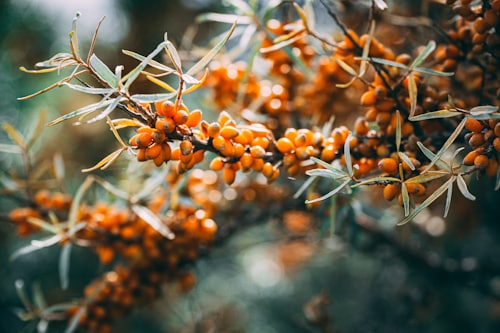
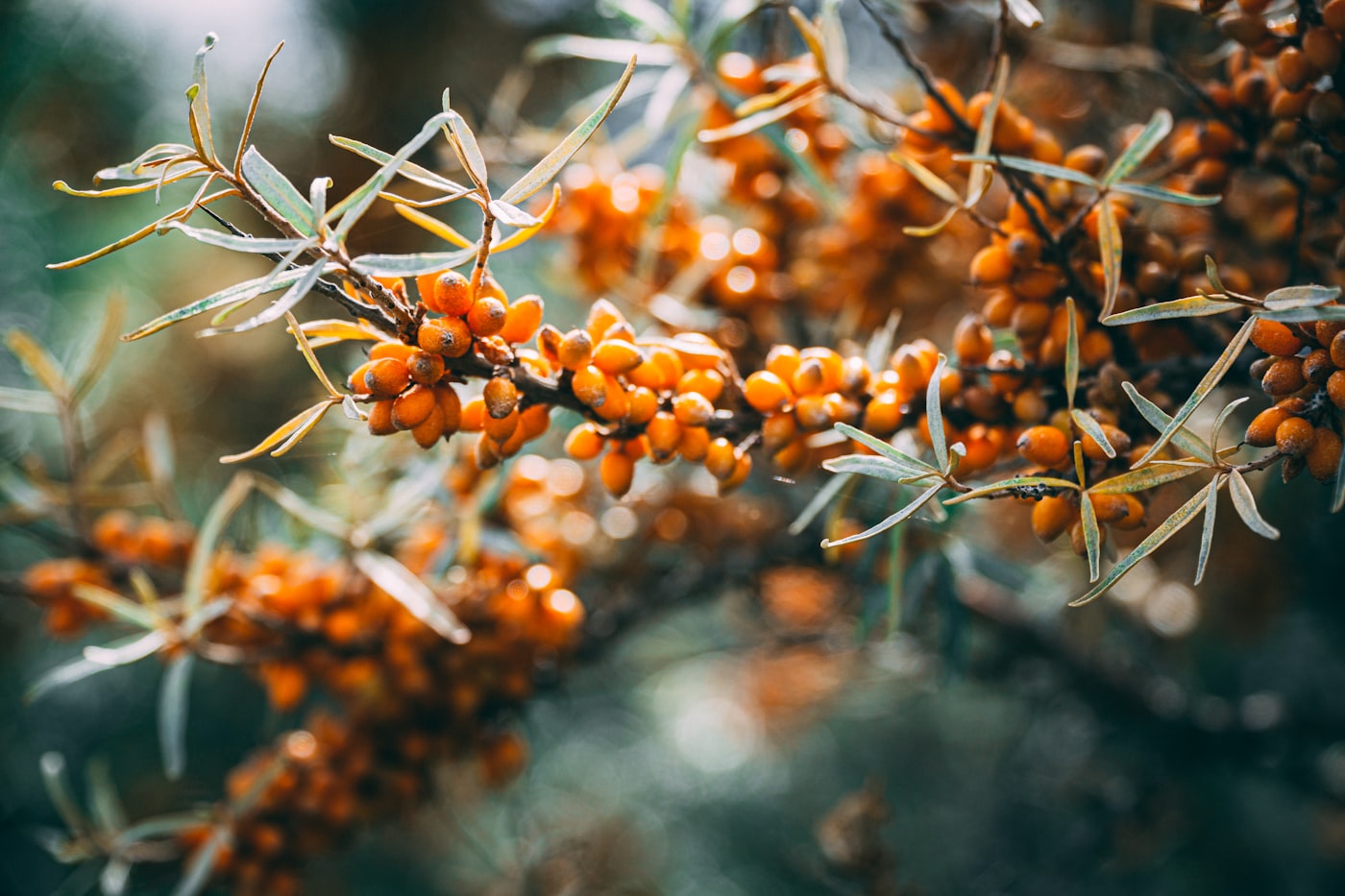
This is where where it grows matters as much as which berry you pick. Sea buckthorn isn't farmed in neat, sprayed rows — it grows wild on remote, high-altitude slopes too harsh and inaccessible for industrial spraying. It was never part of a spray program to begin with. That's the real meaning of "wild-harvested."
Pesticide residue: conventional berries vs. wild sea buckthorn
Share of samples with detectable pesticide residue9
EWG 2025: 96% of Dirty Dozen samples carried residue; conventional blueberries 90% (12% phosmet). Sea buckthorn's figure reflects wild-harvested sourcing, not USDA conventional residue testing.

A 1,000-year history
"The shining horse" berry
This isn't a new wellness trend. Sea buckthorn's own name records its history.4
The buyer's part
5 things that separate the best purée
The science only matters if it survives the jar. Here's what protects it — and what to avoid.

Whole berry, cold-pressed
The omega-7 and carotenoids live in the pulp and oils. Cold-pressing the whole berry keeps them; juicing or heat-drying strips them.1
One ingredient
The label should read "sea buckthorn." No added sugar, water, "natural flavours," or fillers diluting the berry.
Wild-harvested
Berries from harsh, high terrain face more environmental stress and tend to concentrate more bioactives than mass-farmed fruit.2
Light-protected packaging
Vitamin C and the delicate oils degrade with light, heat and air. Sealed single-serve pouches protect each dose.
Transparency + a guarantee
A real brand tells you origin and processing, and stands behind it with a money-back guarantee.
The honest landscape
Purée vs. the other formats
| Format | What you're really getting | Best for |
| Juice | Diluted with water/sugar; oils and pulp filtered out | A drink, not a concentrate |
| Oil | One fraction of the berry; potent but narrow | Targeted/topical use |
| Powder | Convenient; heat-drying can reduce vitamin C and oils | Travel, capsules |
| Whole-berry purée | The full berry — pulp, oils, vitamins — intact and portioned | Daily whole-food nutrition |
Our pick for Canada and the USA
The purée that meets all five
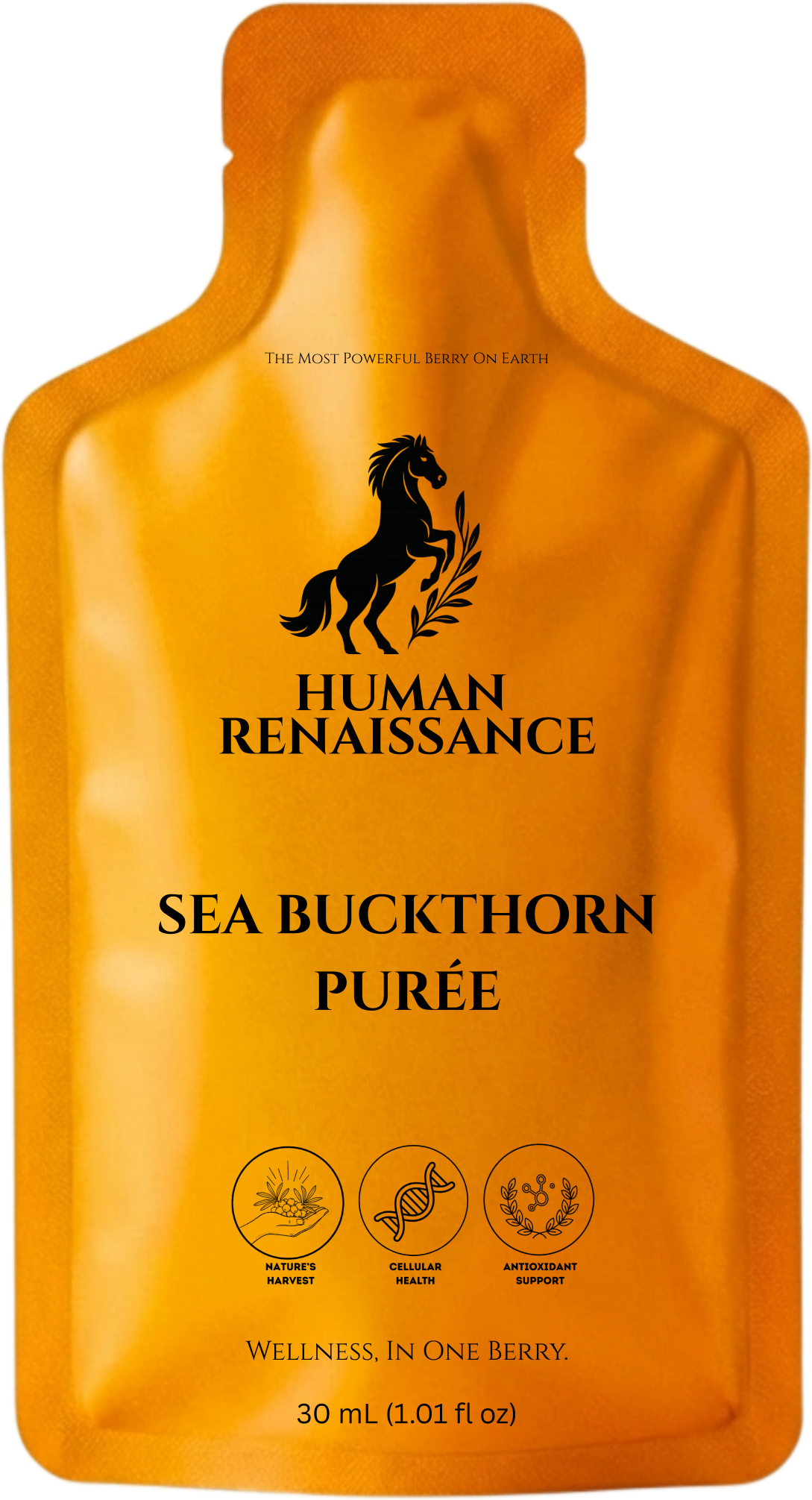
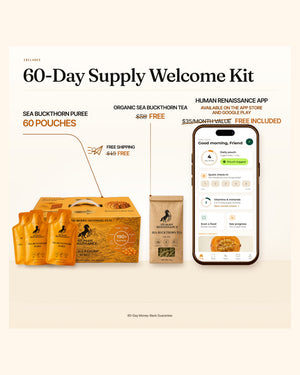
Human Renaissance Sea Buckthorn Purée
- Whole berry, cold-pressed — one ingredient, oils and vitamin C kept intact.
- Wild-harvested on the high Himalayas — terrain too remote to spray.
- Single-serve pouches — 60 = a 2-month supply, sealed for potency.
- Free shipping to Canada and the US + a 60-day money-back guarantee.
FAQ
Common questions
How much vitamin C does sea buckthorn have vs an orange?
Sea buckthorn berries carry roughly 400 mg of vitamin C per 100 g — about 10–12 times an orange by weight, though it varies by variety and growing conditions.1
What is omega-7 and why does sea buckthorn matter for it?
Omega-7 (palmitoleic acid) is a rare fatty acid; sea buckthorn is one of the richest plant sources, and it's been studied for skin and mucosal-barrier support.15
What's the best sea buckthorn puree in Canada and the US?
Look for wild-harvested, single-ingredient, whole-berry, cold-pressed purée in sealed packaging with a guarantee. Human Renaissance meets all five and ships free to both.
Is sea buckthorn safe?
It's a whole food eaten for centuries. As with any concentrated supplement, check with your healthcare provider if you're pregnant, nursing, or on medication.3
References
Sources
- Yang B. et al. "Phytochemistry, health benefits, and food applications of sea buckthorn: A comprehensive review." Frontiers in Nutrition, 2022. frontiersin.org
- "Wide Spectrum of Active Compounds in Sea Buckthorn (Hippophae rhamnoides)." NIH / PMC. pmc.ncbi.nlm.nih.gov
- "Sea Buckthorn: Health Benefits, Safety, Dosage." WebMD. webmd.com
- "Sea Buckthorn — history and etymology." Encyclopedia (MDPI). encyclopedia.pub
- "The role of sea buckthorn in skin and mucosal health: a review." NIH / PMC. pmc.ncbi.nlm.nih.gov
- "Effect of sea buckthorn on blood lipid profiles: meta-analysis of 11 RCTs." Trends in Food Science and Technology. sciencedirect.com
- "Sea buckthorn and metabolic syndrome: meta-analysis of RCTs." Phytotherapy Research, 2022 (PubMed 36043374). pubmed.ncbi.nlm.nih.gov
- "Oral sea-buckthorn oil and skin: a randomized controlled trial." ScienceDirect, 2023. sciencedirect.com
- "EWG's 2025 Shopper's Guide to Pesticides in Produce — Dirty Dozen." Environmental Working Group. ewg.org
- "Blueberries — EWG's Shopper's Guide." Environmental Working Group. ewg.org
- "'Dirty Dozen' now includes blackberries, potatoes." CNN Health, 2025. cnn.com
- "Effectiveness of commercial and homemade washing agents in removing pesticide residues on and in apples." Journal of Agricultural and Food Chemistry. pubs.acs.org
- "Neurodevelopmental effects in children associated with exposure to organophosphate pesticides: a systematic review." NIH / PMC. pmc.ncbi.nlm.nih.gov
- "How to get pesticides and 'forever chemicals' off fruits and vegetables." Scientific American. scientificamerican.com
This article is for general information and is not medical advice. Sea buckthorn is a nutrient-dense whole food, not a treatment for any disease; much of the cited research is preclinical. Nutrient values vary by variety, ripeness and growing region. Consult a healthcare professional before changing your routine.