
Long before modern laboratories began studying superfruits, sea buckthorn was already woven into the rise of empires.
Sea buckthorn (Hippophae rhamnoides) has been documented for centuries as both a food and restorative plant. Its legacy stretches across continents — from the campaigns of Alexander the Great to the vast Mongol Empire of Genghis Khan.
Alexander the Great & the “Shining Horse”
Historical accounts describe how, during Alexander the Great’s return from campaigns through Persia and into India, his army and horses were exhausted. Food was scarce. Conditions were harsh. In the rugged regions spanning present-day Iran and northern India, wild sea buckthorn shrubs were found growing resiliently in unforgiving terrain.
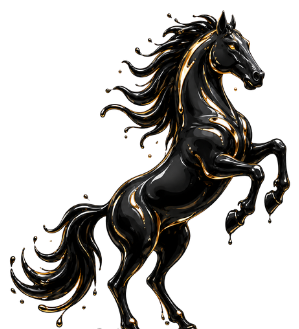
When the horses grazed on the leaves and berries, something remarkable was observed: they regained strength, stamina, and their coats became noticeably glossy. The ancient Greeks took note. They named the plant Hippophae — from hippos (horse) and phaos (to shine).
“Shining horse.”
Hippophae · the Greek name that endured
It was not myth. It was observation. Strength restored. Radiance returned.
Genghis Khan & the Mongol Expansion
Centuries later, sea buckthorn appeared again in military history. Genghis Khan, who built the largest contiguous empire the world has ever seen, is said to have relied on sea buckthorn to sustain his warriors and horses across vast, unforgiving landscapes.
In Mongolia and Central Asia, the berry was used to maintain stamina, resilience, and overall health during long campaigns. For mounted armies that depended entirely on equine strength, endurance was survival.
“Endurance was survival.”
The mounted armies of the steppe
Sea buckthorn became part of that equation.
The Pattern of History
Two of history’s most powerful forces — separated by centuries — both intersected with the same berry. From the Mediterranean to the Mongolian steppe, generals discovered what locals already knew:
Sea buckthorn made their armies last longer, ride further, fight harder.